Bringing Science, Skills and Opportunity to Belfast



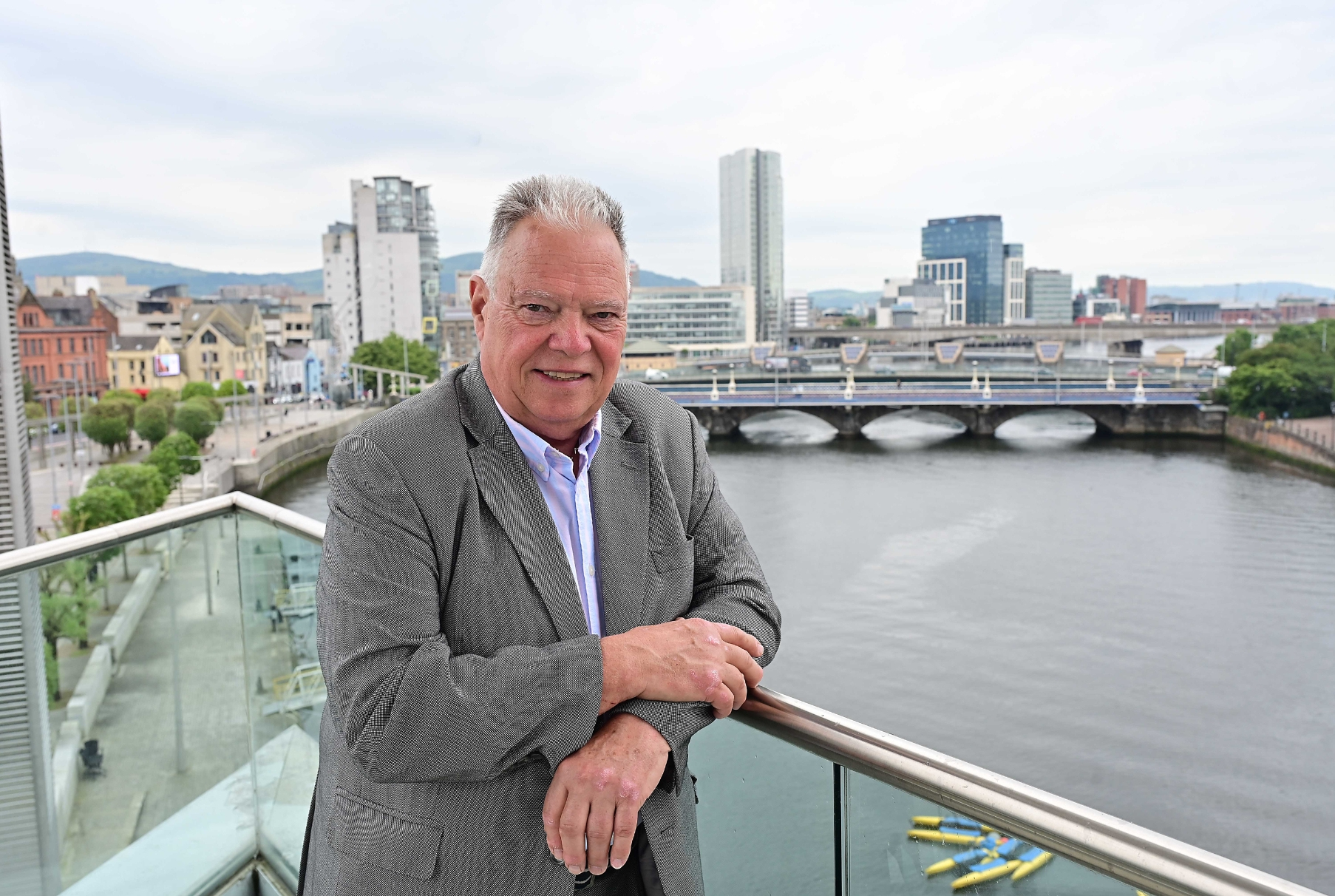
Peter Ramsey-Baggs, Belfast-based consultant oral and maxillofacial surgeon and BAOMS local ambassador disscusses the wealth of opportunity for the industry in Belfast
When the British Association of Oral and Maxillofacial Surgeons (BAOMS) chose ICC Belfast for its Annual Scientific Meeting, it provided an opportunity to bring one of the United Kingdom’s most specialist surgical communities to the city.
I have lived and practised in Northern Ireland for over 50 years and our Association president, Patrick Magennis, is originally from Belfast. Presidents traditionally take the Association’s scientific meeting to their home city, so between us, we wanted to show our British, Irish and international colleagues what Belfast can offer.
A scientific meeting like this provided a great reason to come to Belfast for anyone who had never been before. We brought around 500 delegates together for the three-day meeting, which showcased research, education and clinical practice in what is a small but vitally important medical specialism. Our area focuses on very specialist surgery of the face, mouth and jaw. Our annual exchange of scientific ideas and clinical advances is supremely important.
Selfishly, we also wanted to ensure that fellow surgeons and future trainees got a taste of life in Belfast and discovered that Northern Ireland is not somewhere at the edge of professional life, but a place where ambitious clinicians can build meaningful careers, make a visible contribution and enjoy an excellent quality of life.
This future talent pipeline is especially important for Oral and Maxillofacial surgery. Northern Ireland has only eight consultant maxillofacial surgeons, with services centred in Belfast and Derry/Londonderry. It is a small, highly specialised workforce undertaking complex, demanding work. We need to train people here, but we also need to keep bringing in ideas, energy and expertise from outside. Conferences keep us connected and open to ideas and innovations.
Inspiring the next generation
One of the most important elements of this meeting was a schools initiative, which brought over 100 sixth-form students from across Northern Ireland into the conference. The aim was to inspire them into this career and I hope we’ve done a good job of that with a wealth of fascinating interactive displays and exhibits.
Medicine and dentistry are demanding courses as a starting point; the pathway into our particular specialism is long, complex and demanding, requiring both medicine and dentistry before taking the path to ‘max-fax’. We wanted to give the students a taste of the high-tech, futuristic tools we have at our disposal in this area.
Oral and maxillofacial surgery offers great breadth of specialisation. Some colleagues specialise in cleft lip and palate, others in facial trauma, cancer, reconstruction of the consequences of serious injury, Some focus on children with complex dental and jaw problems, or diseases of the salivary glands. If even a handful of pupils left ICC Belfast inspired with a new sense of possibility, the initiative will have been worthwhile.
Innovation that brings learning to life
The conference and exhibition programme showcased how rapidly education and practice are changing. When I trained, anatomy was learned through dissection of real human cadavers. Today, we saw students trying out virtual reality headsets, moving virtual pieces of bone around to understand their place in space. It may feel almost like a game, but it is serious learning: in real training these VR headsets are used to explore the body, understand anatomy and practise surgical steps with someone who may be hundreds or even thousands of miles away. This is exciting stuff!
There were also powerful examples of 3D modelling, which again is deeply rooted in Northern Ireland, as Belfast was involved in some of the earliest work in this field 30 years ago. A CT scan can now become a physical 3D model that surgeons can hold, study and use to plan complex procedures and repairs. Models can guide the reconstruction of parts of the jaw. What started in Belfast remains transformative today and that makes me incredibly proud.
Why Northern Ireland needs talent
Scientific meetings such as this have a strategic importance: they showcase our city, our hospitals and our professional community. Being an ambassador for the NI Ambassador Network provided a valuable opportunity to promote the BAOMS speciality, highlight the region’s expertise, support with the hosting of events like this and share critical experience. These meetings also play an important role in inspiring the next generation of surgeons. They allow trainees to present their work, meet senior specialists, discuss techniques and imagine future fellowships or posts. They help people understand that in Northern Ireland they can be part of a close professional network, take on meaningful responsibility and help shape services in a place where their contribution will be noticed.
For Northern Ireland, attracting new medical, dental and surgical professionals is not optional; it is essential. We need local young people to see that they can train, work and thrive here. We also need professionals from elsewhere to consider Northern Ireland as a serious career destination. Too often, junior trainees leave for England, Scotland, or further afield, and do not return. If services are not funded and sustained appropriately, and if specialist skills are lost, they are extraordinarily difficult to rebuild.
Connections that last
Of course, scientific meetings are not only about lectures, posters and technology. They are also about people. In a small specialty, the annual meeting is when we see friends, mentors, former trainees and colleagues we may only see once a year. This year Belfast welcomed delegates from across the UK and Ireland, as well as international visitors including Japanese and American colleagues.
We caught up on families, careers, retirement plans, trainees coming through and the cases that have stayed with us. We shared food, drink and company. We spotted future talent and made introductions that may become collaborations. Medicine is a people business before it is anything else.
Belfast is particularly good at that. Its hospitality is famous because it is genuine. Visitors felt it in the welcome, the conversation and the ease of the city. If they left not only better informed, but also better connected and more open to returning, then choosing Belfast as a conference destination has done something valuable for science, for the specialty and for Northern Ireland. For me, that’s the real legacy of bringing this meeting here.